
Shop Local
Small-batch, natural products from local Texas artisans. Visit our stores in Lake Highlands & Bishop Arts, or ship nationwide.

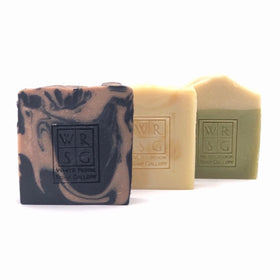
Pick up one of our round bars and you'll notice it feels different. Heavier. Denser. It lathers differently too — richer, creamier, without that squeaky-clean feeling that fades fast. That difference starts with the process: cold process soap making, the same method we've been using here in Dallas for over ten years.
If you've ever wondered what "cold process" actually means — and why it produces the soap it does — this is for you.
The name tells you what doesn't happen. No external heat is applied during cold process soap making. That's it.
Here's the basic chemistry: soap is made by combining fats or oils with an alkali — in our case, sodium hydroxide (lye). When they meet, a chemical reaction called saponification begins. The oils transform into soap molecules and glycerin. The reaction is exothermic, meaning it generates its own heat. With cold process, we let that reaction happen naturally, at its own pace, without adding heat to speed it up.
The result needs time. Cold process soap is poured into molds and left to cure — typically four to six weeks — while saponification completes and excess water evaporates. What comes out is a firm, smooth, long-lasting bar.
Hot process soap is made the same way, but heat is added during production — usually in a slow cooker or oven — which accelerates saponification and makes the soap usable sooner. The trade-off is texture: hot process bars tend to have a more rustic, uneven surface. Cold process takes longer but produces a smoother, harder bar with a finer finish. For us, the patience is worth it.
One of the natural byproducts of saponification is glycerin — a humectant that draws moisture to the skin's surface. In cold process soap made from scratch, that glycerin stays in the bar. It isn't extracted, added back later, or listed as an ingredient afterthought. It's simply there, created naturally during the reaction, in every bar we make.
We've used the same base recipe for over ten years. Every WRSG bar starts with five oils, each chosen for what it contributes to the finished soap:
Beyond the base oils, we use two additional ingredients that most people don't know about — and both matter.
Citric acid: When citric acid is added during soap making, it reacts to form sodium citrate — a natural chelating agent. In plain terms, that means it binds to the minerals found in hard water (like calcium and magnesium) and prevents them from reacting with the soap. The result: less soap scum. If you've ever lived in Dallas, you know our water is hard. We built the fix right into the bar.
Sodium lactate: Sodium lactate is derived from the natural fermentation of plant sugars. We use it for two reasons: it helps our bars release cleanly from our molds, and it produces a harder bar from the start. It's a small addition with a meaningful impact on the quality of the finished soap.
In soap making, a "lye discount" (also called a superfat) means intentionally using slightly less lye than the math requires to saponify every drop of oil. We discount our recipe by about 6%, which means roughly 6% of our oils remain in the bar unsaponified — as free, conditioning oils.
Why? Because a bar calculated to convert every oil molecule to soap can be harsh. Leaving a small percentage of free oils in the bar ensures there's something beyond the soap itself making contact with your skin. We've found 6% to be the right balance — a bar that lathers well, cleans effectively, and leaves you feeling comfortable.
Most weekends, our team makes between 1,000 and 2,000 bars of soap right here in Dallas. We call it super-batching — mixing large batches using the same trusted recipe we've refined over a decade. Consistency matters when you're making soap at this scale, and ten years with the same formula means we know exactly what we're going to get.
Every bar is poured into our distinctive 3-inch round molds — a size we chose deliberately because it fits naturally in your hand and wears evenly as you use it. After demolding, each bar is hand-stamped with the WRSG mark, then wrapped in kraft tissue and set to cure for four to six weeks. The kraft tissue lets air circulate while protecting the bar as it finishes aging. We don't rush it.
Our WRSG line is completely vegan — no animal fats, no animal-derived colorants. We color with natural pigments and botanicals and scent with essential oils. Made in Dallas. Made from scratch.
Cold process soap lathers differently than most commercial bars — the bubbles tend to be creamier and denser rather than light and foamy. That's a function of the oils and the process, not a flaw. Give it a few uses and you'll find the rhythm.
Store your bar on a well-draining soap dish between uses. Cold process soap is a real bar of soap — it needs to stay dry to last. A bar at the sink for hand washing can last several months. A bar used daily in the shower will go faster, especially if it sits in standing water. Treat it right and it pays you back.
Your bar may arrive with a light dusting of white powder on the surface — this is called soda ash, a harmless byproduct of cold process soap being exposed to air. It rinses off with the first use and doesn't affect the soap at all.
We sell our cold-process soap bars in both of our Dallas stores — Lake Highlands and Bishop Arts — and online at whiterocksoapgallery.com. If you have questions about any of our soaps or ingredients, our staff knows every bar on the shelf. Come in and find your bar.